Published on
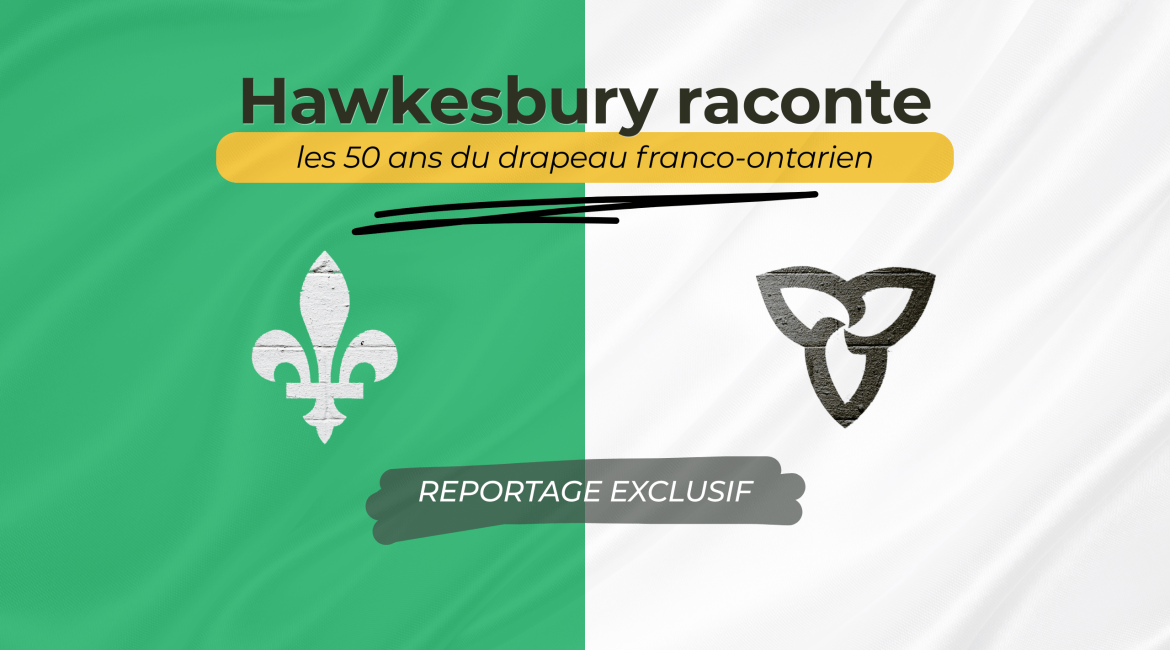
The green-and-white flag flies above schools, public institutions and homes. Fifty years after its creation, it continues to carry stories of struggle, hope and connection. In Hawkesbury, this symbol is very much alive. To mark its 50th anniversary in 2025, Berwin Sydney, marketing coordinator for Hawkesbury’s Welcoming Francophone Community (CFA), produced a special video report featuring long-time residents and newcomers. Their different experiences reveal how the flag has shaped a shared memory and continues to inspire the future.
The origins of a symbol
In 1975, history professor Gaétan Gervais and political science student Michel Dupuis created a flag to represent Ontario’s Francophone community. It was raised for the first time at the University of Sudbury on September 25 of that year.
The initiative soon took on cultural and political significance. In Hawkesbury, near the Ontario–Quebec border, the flag became a familiar point of reference. It appears at celebrations, outside schools and at community gatherings. Fifty years later, its meaning remains powerful. Explore Franco-Ontarian history.
The struggle for French-language education: Jean Villeneuve remembers
The flag resonated with a community that had long been advocating for its rights. In Ontario in the 1960s, access to education in French could not be taken for granted.
Jean Villeneuve recalls his teenage years:
“When I started high school in 1966, all the classes were in English.”
Jean Villeneuve — translated from French
In the early 1970s, student strikes helped bring about change. Young Francophones challenged the expectation that they would continue their education in a language other than their own. Families and community organizations supported their efforts.
“That wave of action allowed us to go further.”
Jean Villeneuve — translated from French
Over time, those efforts helped expand French-language education. French-language school boards were eventually established, allowing new generations to learn in their own language.
A resilient community: Pierre Étienne Daignault’s perspective
Over the years, Franco-Ontarians have had to defend the progress they made. Attempts to push their language and culture aside have also strengthened their resolve.
Pierre Étienne Daignault, identified in the report as a lawyer and director of Hawkesbury’s legal clinic, expresses this resilience through a striking image:
“They tried to bury us, but they didn’t know we were seeds.”
Words quoted by Pierre Étienne Daignault — translated from French
His words capture a community’s ability to renew itself. In Hawkesbury and elsewhere, French-speaking communities have continued to put down roots in the face of adversity.
A symbol for the future: Yves Makemta’s perspective
Today, the flag also speaks to people who come from elsewhere and choose to make a home in French-speaking Ontario.
Originally from Cameroon, Yves Makemta remembers his first encounter with the green-and-white flag:
“It told me that I was part of a new community, and that I could dream of anything when it came to the struggle for the Francophonie.”
Yves Makemta — translated from French
For him, the flag is more than a reminder of the past. It is a sign of inclusion and an invitation to take part in the Francophone community’s story.
Together, these voices show how the Franco-Ontarian flag connects generations. It carries memories of the struggle for French-language education, reflects the community’s resilience and opens a window onto its future. Fifty years after its first raising in Sudbury, it continues to bring people together in Hawkesbury, welcoming new faces while keeping shared memories alive.
Watch the video report in French and share these stories with others.
